The problem
In a shoe shop, the two models in your hands look about the same. Everything On knows that would tell them apart lives online, where nobody standing in the store is looking.
What it is
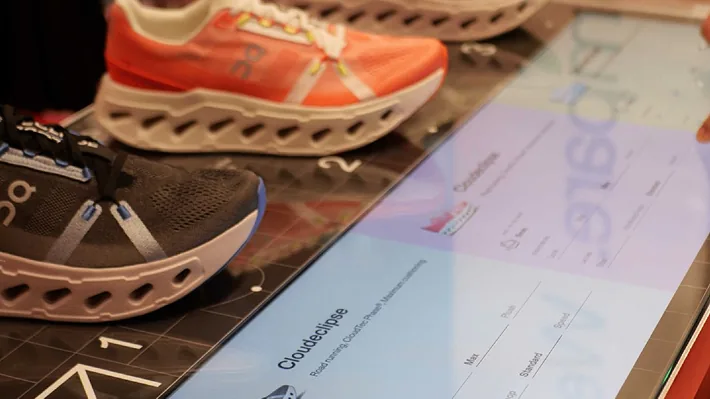
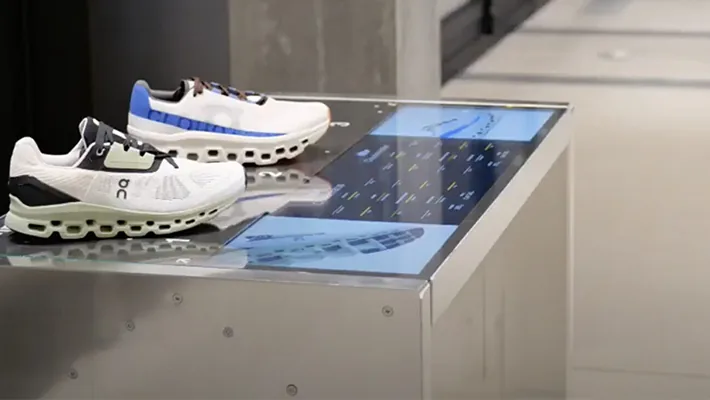
A table. You put shoes on it and it tells you about them.
Set a model down and the screen wakes with its details. Add a second and you get the comparison. Keep going and it starts surfacing models you haven’t picked up.
Finding the moment
The research happened in the stores, watching how people shop for running shoes. What they reach for, what they put side by side, where they stall.
Comparison was the gap. Customers would hold two shoes, look between them, and have no way to learn what separated them. That’s the moment the table was built for.
What it deliberately doesn’t do
It doesn’t compete with the product. Handling the shoe is why people came into the shop, and a screen pulling attention away from the thing in your hand would make the visit worse.
So the table stays quiet until a shoe is on it, and the interaction is built on something customers already do: pick one up, put it down, look.
What I took from it
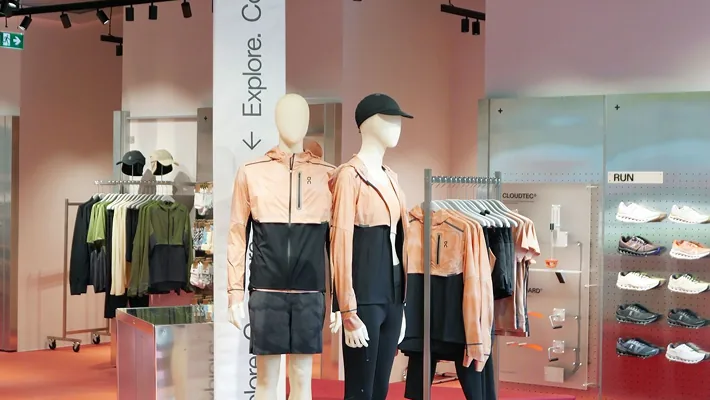
The digital parts of a physical space work best when you don’t notice them working. This one succeeds because it follows how people already shop, and doesn’t ask them to learn a new one.